The design has been sitting in your phone for three weeks: a paw print, or the curve of his ear, or just her name in your own handwriting. You keep opening it and closing it, because a tattoo is permanent and your grief still feels brand new.
That hesitation is healthy, and it is not a sign you are doing this wrong. A memorial tattoo for a dog can wait as long as you need it to. This guide covers design ideas, what to ask a tattoo artist before you book, and a careful look at the question many people type next: whether to put their dog's ashes in the ink.
If you only remember one thing: you are allowed to take your time, and you are allowed to ask the artist a lot of questions.

Is it too soon?
There is no correct waiting period. In a Modern Loss piece on tattoos made after someone has died, some people waited weeks or months, others got tattooed on an anniversary, and one went as soon as a shop could fit them in. Those stories are mostly about losing people, but the same range shows up for pets.
If you are unsure, try these before you commit:
- Keep the idea for a few weeks. If it still feels right on an ordinary Tuesday, that is useful information.
- Book a consultation, not a session. Talking to an artist doesn't lock you in.
- Ask for the stencil to be printed and look at it on your skin in the mirror, in different light, before any needle touches you.
- Wait for a calmer day if you're crying a lot that week. The tattoo will still be there to get next month.
If the grief feels heavy enough that it is getting in the way of daily life, it may be worth talking to someone first. Our guide to free pet loss support lists places you can reach tonight.
Design ideas that are not a generic paw print
A paw print is a classic for a reason. A-Z Animals, in its roundup of pet memorial tattoos, lists paw prints, names in cursive, birth flowers, portraits, and fine-line outlines as popular choices. Here is how to make any of them yours:
- A real paw print. If you saved an ink or clay print, your artist can trace it so the lines are really theirs.
- Their name in your handwriting, or theirs. A note you wrote on their vet folder or a scan of the tag still on the collar can become the lettering.
- A flower or plant you associate with them. A birth-month flower works if you know the birthday. A-Z Animals notes that not all rescue or shelter dogs have a true birth date, so a flower from the garden they dug up works just as well.
- Their markings. The patch over one eye, the white sock, the freckles on the nose. Fine-line outlines of a profile or silhouette can be small and easy to cover with a sleeve.
- A portrait. A-Z Animals advises that you look for an artist who specializes in detail for this one. Ask to see healed portraits, not only fresh ones.
- A small thing only you would recognize. A leash clip, the bump on the nose, a pair of ears from behind. These tend to age well and don't need an explanation.
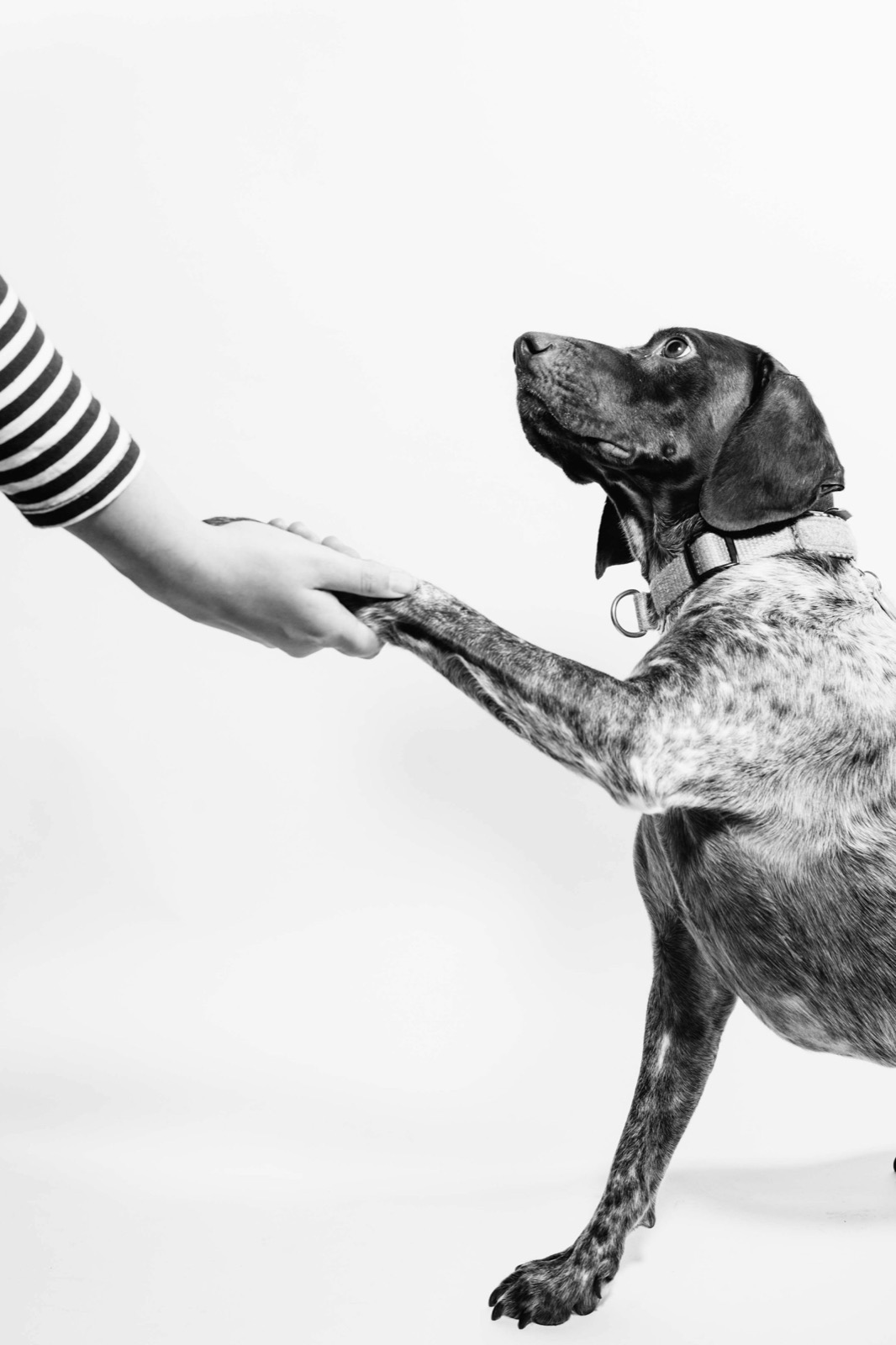
What to ask the artist before you book
Tattooing is regulated at the state and local level, and the rules differ. The FDA notes that state and local authorities oversee the practice of tattooing, while the inks and pigments are subject to FDA oversight as cosmetics. So the best check is your own state or county health department's licensing rules, plus a few direct questions:
- "Can I see healed work in this style?" Fresh photos are flattering. Healed photos show how lines settle.
- "Are you licensed here, and can I see it?" Look up your state or county requirements first so you know what to expect.
- "Do you open new needles and use new ink caps in front of me?" A good studio will not mind the question.
- "What inks do you use?" The FDA warns that an ink can be contaminated even if the container is sealed or the label says it is sterile, so a thoughtful artist will have a clear answer on where their ink comes from and how it is handled.
- "What is your aftercare, and what should I do if something looks wrong?" The FDA advises that if a problem develops you should contact your health care professional and tell the artist so they can identify the ink. It also notes that a rash can mean an allergic reaction, and because the ink is permanent, the reaction may persist.
- "How long will the session take, and can we stop if I need a break?" Grief can make a long session harder than you expect.
- "Can you leave a little room?" If you might want to add another dog's name or a date later, say so now.
Bring two or three photos of your dog, any paw print or handwriting you want to use, and an idea of where on your body you want it. You do not need a finished design. Many artists like to draw it with you.
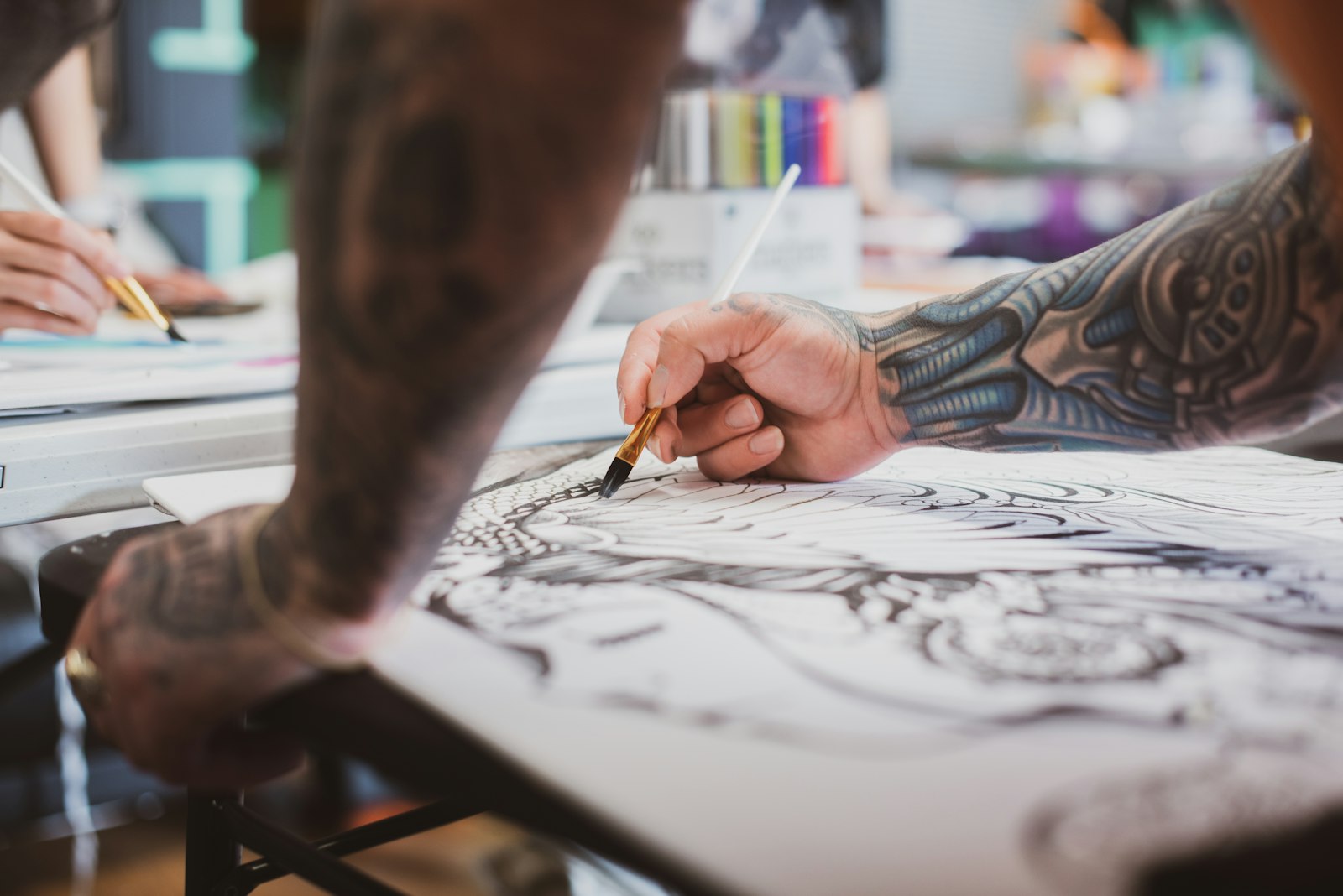
What about ashes in the ink?
This is one of the most common questions, and the honest answer is that the evidence is thin. Some artists offer it. Others refuse. We did not find veterinary or dermatology guidance that settles the safety question for pets or people, so we won't tell you it is safe or unsafe. What we can pass on is what to ask.
Funeral.com, a cremation-products company, wrote in a January 2026 guide about human ashes that cremated remains are mostly processed bone minerals that can look like chalky powder or include small granular pieces, and that adding particles to ink can raise the risk of irritation. Treat that as one company's view, not medical advice. It is still a fair reason to talk to your artist and your doctor or a dermatologist first, especially if you have sensitive skin, allergies, or a condition that affects healing.
If you are considering it, ask:
- Do you do this work, and what is your process?
- Who handles and mixes the ashes, and where?
- How do you keep the ink clean, and what would make you say no?
- What do the first two weeks look like, and which signs mean I should call a doctor?
If the answers feel vague, you can still honor the ashes another way. A tattoo in their memory does not have to contain them. Many people keep the ashes in a small urn or keepsake and carry the design on their skin. Our list of what to do with dog ashes has ideas that do not involve a needle.
If you lost more than one dog
People search for memorial tattoos for two dogs or several dogs because the loss does not come one at a time. A few ways to handle it:
- Choose one simple shape, such as two paw prints or two flowers, and add to it later.
- Put their names in the same handwriting so they read as a pair.
- Do one now and wait on the other. They don't have to be finished on the same day.
After the tattoo
Healing is a physical process, and it happens while you are still grieving. Follow your artist's aftercare instructions, keep an eye on the area, and do not hesitate to call a doctor if the skin looks wrong. Some people feel lighter afterward. Others feel a fresh wave of missing them. Both are normal.
If you are not ready for ink, or you would like something you can change later, you can create a free memorial page with their photos and a few words about who they were. It costs nothing, and it is yours to add to whenever a memory comes back. For more ideas that are gentle on the budget, see free ways to honor your pet and our list of pet memorial ideas.
Whether you get the tattoo next week, next year, or never, it will not change how much you loved them.
If this helped, you can pass it on to someone who is grieving.
Keep reading
- 2026-11-14
Dreamed About Your Dog After They Died? You Are Not Alone
In the dream she is waiting at the top of the stairs, and then the alarm goes off. What research says about dreaming of a pet who died, and gentle words for the dreams that hurt.
- 2026-11-12
Can You Bury a Dog in Your Backyard? Rules Vary by State
State pages are often written for livestock, and counties can be far more specific. Here is what we could confirm in seven places and three things to do before you dig.
If you are thinking about harming yourself, call or text 988 in the US, any time.