You open the front door after work and nothing happens. You set your keys down and the sound of them on the table is the loudest thing in the house. Nobody needs to go out, nobody needs dinner, and the evening suddenly has no shape.
If the house feels too quiet after your dog died, there is a reason. A dog doesn't only keep you company. A dog sets the clock for your day: the first walk, breakfast, the evening stroll, the last trip outside before bed. When that clock stops, the hours can feel unmoored, and why pet loss hurts so much goes deeper than missing a pet. Below are small, practical steps for the mornings and evenings that feel emptiest. There's no timeline here, and no right or wrong way to do any of it.
If tonight is especially hard, you don't have to wait it out alone. Our pet loss support guide lists free hotlines, online groups, and what's open after hours.


Why the silence feels so loud
For years, your dog's sounds were part of the background. Tags jingling. A long sigh from the couch. A bark at the mail carrier. You may not have noticed them until they stopped.
Grief also shows up in the body and in ordinary chores. Cornell University's College of Veterinary Medicine lists changes in appetite, sleeping more or having trouble sleeping, restlessness, and difficulty with the usual tasks of daily life among the ways people experience pet loss. If you've stood in the kitchen at feeding time not sure what to do with your hands, that's part of it.
Cornell also says there is no "normal" way to grieve a pet, and no set timeline that grief will follow. Whatever your house needs, silence or a radio left on, is allowed.
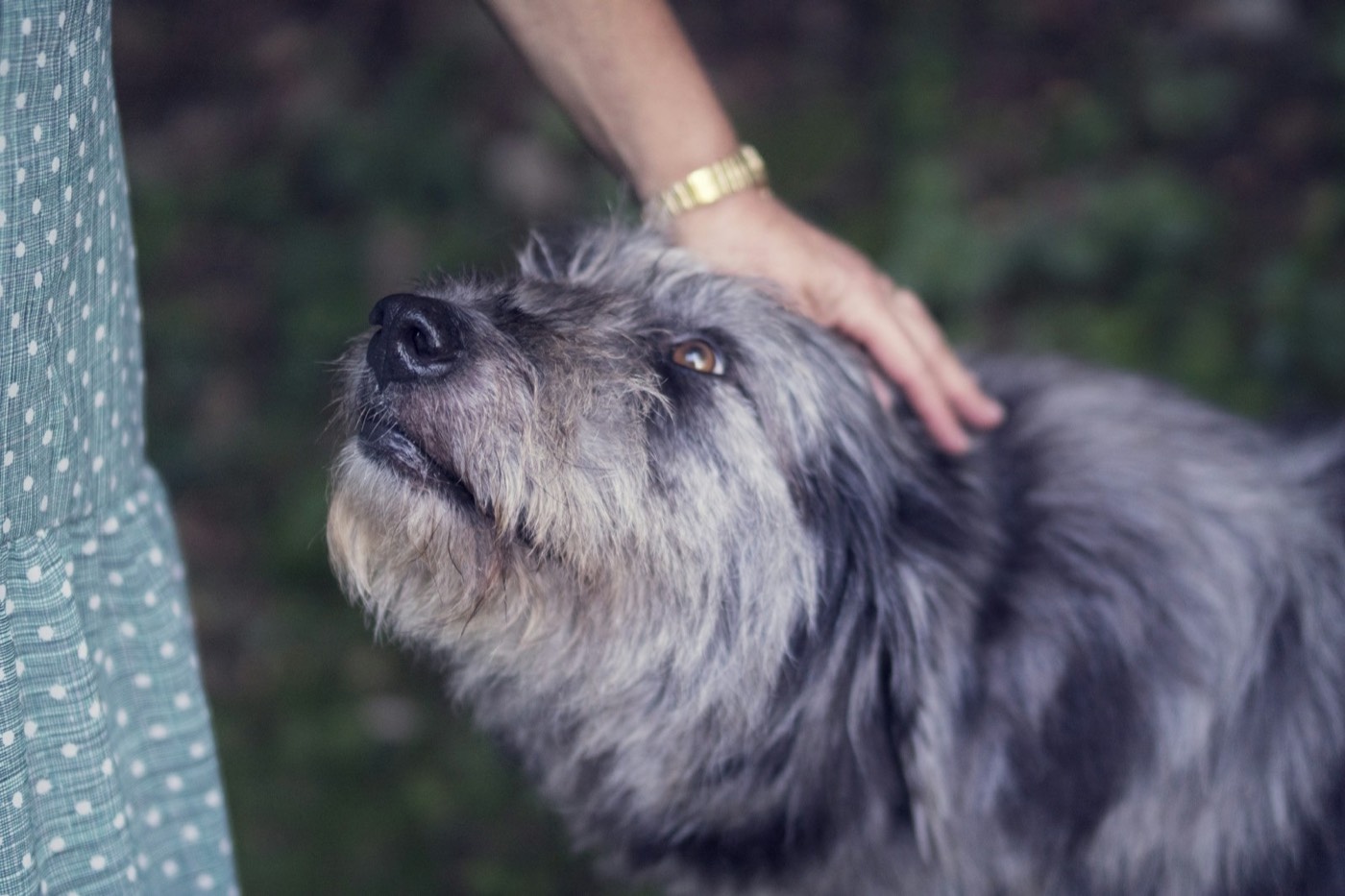
When the dog you lost was old
An old dog has often been with you through a big stretch of life. A move, a new job, kids growing up, maybe another loss along the way. Twelve or fifteen years is a long time to share a home with someone.
Losing them can also mean the end of a season of care. Maybe the last months meant pills at set hours, carrying them up the stairs, or getting up at night to let them out. Cornell notes that grief can begin before, during, or after a death, so you may have been grieving for a while already.
That kind of care takes a lot out of a person. In a study of 238 dog and cat owners, people caring for a pet with a chronic or terminal illness reported more stress and more symptoms of depression and anxiety than owners of healthy pets. If you feel worn out as well as heartbroken, there's nothing strange about that. You may need rest you haven't had in months.

Small steps for the mornings
Mornings can catch you off guard, because the routine still lives in your body. Here are a few ideas.
- Keep the time, change the task. If you used to walk at 7, step outside at 7 anyway, even for five minutes on the porch with your coffee, or pick a different hour if the old walk time is too much.
- Try a new route. If every corner of the old loop holds a memory you aren't ready for, a different street is allowed. You can also walk the old one on purpose, as one of these free ways to honor your pet.
- Find a new reason to get up. Feeding the dog may have been what got you out of bed. Something small can stand in for now, like watering a plant or making yourself a real breakfast.
- Tell one person. A text to a friend who knew your dog, something like "This morning is hard," can be enough.
Small steps for evenings and nights
Evenings are often when the quiet settles in. The after-dinner walk, their spot on the couch, letting them out one last time before bed.
MedlinePlus, from the National Library of Medicine, notes that people who are grieving may have crying spells and trouble sleeping. Cornell's list includes sleeping more as well as sleeping less. If your nights feel off, that's a common part of grief, not something you're doing wrong.
- Add a little sound. A podcast, music, or the TV turned low can soften the silence. If quiet feels better, keep it quiet.
- Mark the walk time. A short walk on your own, a phone call, or a few minutes outside can fill that slot without pretending nothing changed.
- Write a few lines. Cornell suggests expressing your emotions in words, writing, or art. A sentence or two about your dog before bed is plenty.
- Go easy at bedtime. If their bed was next to yours, you can leave it there for now or move it to another room. You can change your mind later.
The bowl, the bed, and the leash
Their things can be the hardest part. The bowl you almost trip over. A collar in the kitchen drawer. The leash you still reach for on your way out.
There is no deadline for putting them away. Some people clear everything in the first week because seeing it hurts too much. Others leave the bed right where it was for months. Some take a middle path: wash the bowl and set it on a shelf, keep the collar somewhere they choose, and put the rest in a box to open later.
If someone tells you you're holding on too long, or moving too fast, you can let that go. Cornell's advice is to surround yourself with compassionate people and set boundaries with anyone who isn't supportive of your grief.
When they were the last pet in the house
If your dog was the only animal at home, the quiet is complete. No one greets you at the door. No one needs you home by dinnertime.
For people who live alone, this can cut deeper. In a small study of older women living alone in Alberta, Canada, participants described losing more than their companion. Many had gotten to know their neighbors and community through walks with their animal, and that daily contact went away too. Several also described how their routine changed once they were no longer anyone's caregiver. The study included only 12 women, so it can't speak for everyone, but those losses may sound familiar.
A few things that may help when you're the only one left at home:
- Keep saying hello to the neighbors you used to see on walks. Many of them knew your dog and may want to hear what happened.
- Plan one reason to leave the house on the hardest day of the week, even a short errand.
- Ask a friend or family member to check in on a regular schedule, like a Sunday phone call.
- Don't let anyone hurry you into a new pet. Whether and when to bring another animal home is your decision, made on your own time.
Be gentle with yourself
Cornell's guidance here is short and kind: don't rush the process, and be patient and kind with yourself. It also notes that grief rarely moves in a straight line, and that feelings can shift from day to day or even moment to moment. A decent morning followed by a terrible evening is normal.
You don't have to be "over it" by any date. You also don't owe anyone tears on a schedule. Grief can mean weeks of tears, or numbness at first and then a hard hit months later from something as small as a bark on a neighbor's TV.
If the heaviness doesn't ease, or it keeps getting in the way of work, eating, or sleep, it may be time to see your doctor or a counselor. The pet loss support guide lists free hotlines, including Cornell's, and groups full of people who understand.
If you ever have thoughts of not wanting to live, call or text 988, any hour of the day or night, or call 911 if you are in immediate danger. The 988 Lifeline is free and confidential, and you don't have to be suicidal to reach out.
When you're ready, you can light a candle for your dog. Or simply sit with the quiet for a while and remember the sounds that used to fill it. There is no hurry to fill it back up.
If this helped, you can pass it on to someone who is grieving.
If you are thinking about harming yourself, call or text 988 in the US, any time.