It is two in the morning and the cat is calling again, a long, low cry from the hallway where her sister used to sleep. You get up, you sit on the floor with her, and you realize you have been so busy missing one animal that you hadn't noticed how much the other one is missing her too.
When a pet dies, the animals left at home often change. A cat may wander and call. A dog may stop finishing meals. A cat who lived with a dog may suddenly follow you everywhere. This guide is for homes with cats and homes with both a cat and a dog: cats who lost a cat, cats who lost a dog, and dogs who lost a cat. It covers what studies of these animals found, which changes need a vet, and what to do this week.
If you only have a minute: keep meals, play and bedtime the same, give attention when it is asked for, and hold off on a new pet. Watch the food bowl most closely. A cat who stops eating needs a vet quickly, sooner than most people expect.
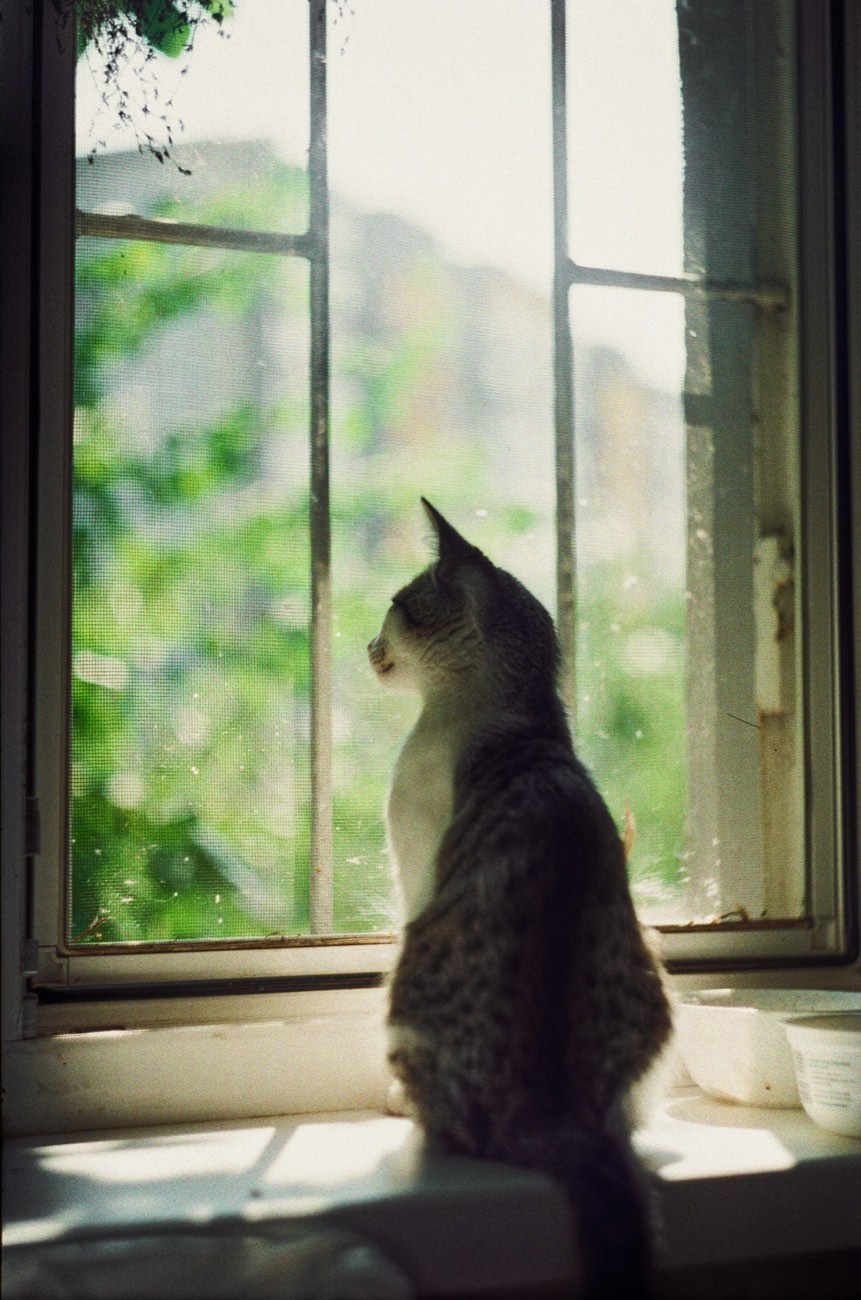
What researchers found in cats and dogs
Two owner surveys are the most useful here, and both have the same limit: they record what people saw, not what the animals felt.
In a 2016 study in the journal Animals, Jessica Walker, Natalie Waran and Clive Phillips collected 279 surveys from owners in Australia and New Zealand, covering 414 surviving animals. Of those 414 animals, owners saw at least one change in 75% (311 animals: 159 dogs and 152 cats); among those, owners reported changes in affection-seeking in 78% of cats and 74% of dogs, and changes in territorial behavior, such as spending time in the other animal's favorite spot, in 63% of cats and 60% of dogs. Cats called more often (43%) and more loudly (32%). Dogs ate less (35%) and slept more (34%). The median length of the changes in both species was under six months. The sample included some dogs who had lost a cat and some cats who had lost a dog.
In 2024, Brittany Greene and Jennifer Vonk published a survey of cat owners in Applied Animal Behaviour Science (journal record). As PsyPost reported, the researchers surveyed 412 owners, in a country PsyPost does not name, whose cat had lived with a cat or a dog that died. Surviving cats were reported to eat less, play less, and seek more attention from people, and the changes were stronger when the two animals had been close, for example playing or sleeping together. The researchers also noted that owners who were more attached reported more changes, so some of what owners saw may reflect their own grief.
So the honest answer to "is my other pet grieving?" is that something often changes, it is often temporary, and nobody can see inside. You don't need certainty to help.
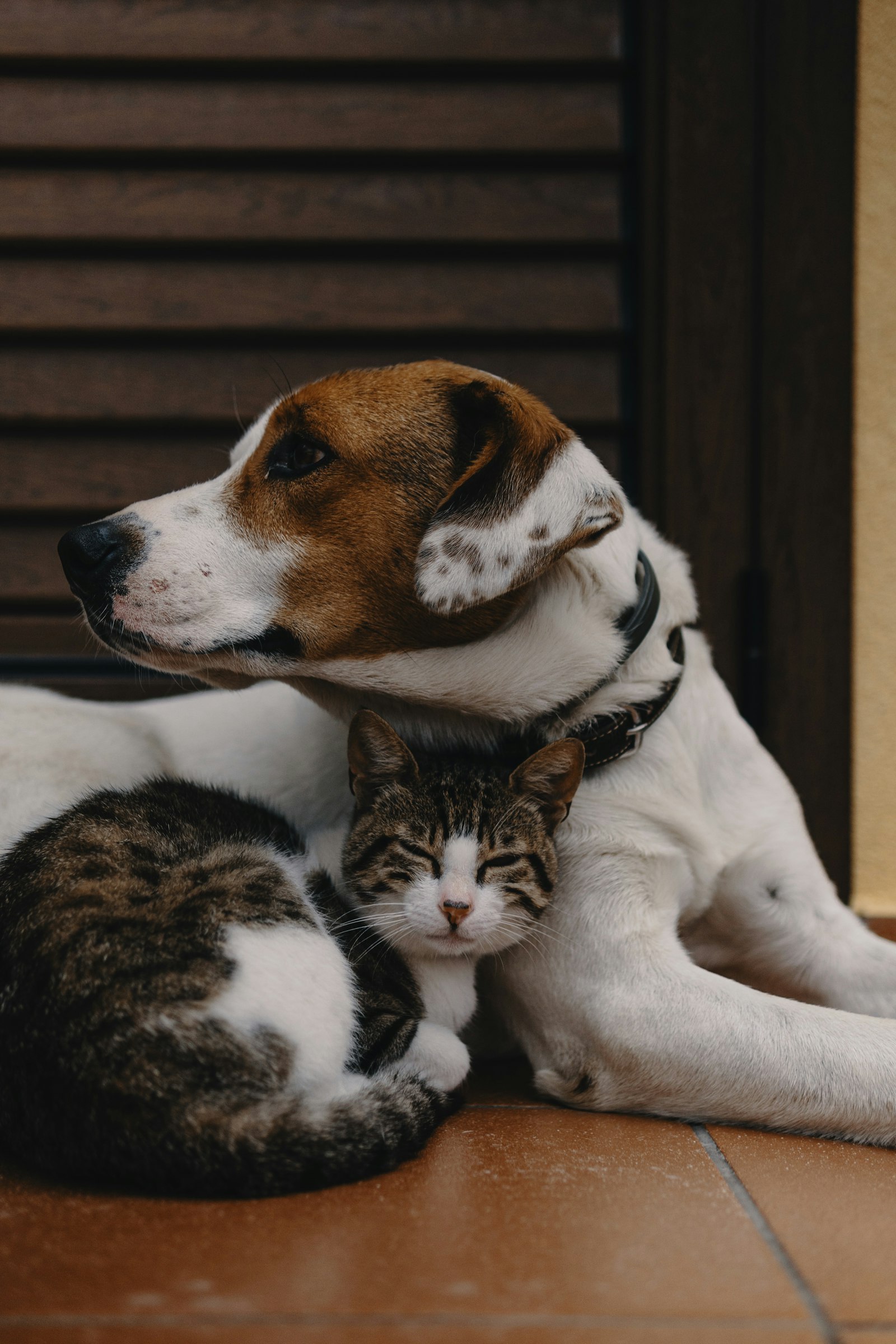
Cats, dogs and mixed homes look different
- A cat who lost a cat. In the 2016 survey, louder and more frequent calling stood out in cats. In the owner threads we read (more below), the crying came at night or at mealtimes.
- A cat who lost a dog. The 2024 study counted dogs as companions too. In that study, surviving cats were reported to seek more attention from people, so a cat who used to curl up against a dog may turn to you instead.
- A dog who lost a cat. Only 36 dogs in the 2016 survey had lost a cat, and the one difference the researchers found was that dogs who lost a dog were more likely to eat more slowly. A dog who lost a cat may still wait at the spot where the cat used to sit.
- A house with several animals. Some animals change, some don't, and the order among them can shift. Feed them apart for a while if one starts pushing another off a bowl.
When not eating means calling the vet
This is the part that matters most, and it is different for cats. The Cornell Feline Health Center's page on appetite loss in cats says a sustained loss of appetite can severely affect a mature cat's health if it lasts as little as 24 hours. The same page mentions cats who lost their appetite after losing a feline companion, and lists hepatic lipidosis, a serious liver condition, among the problems tied to not eating.
- Cats: if your cat eats little or nothing for about a day, call your vet. Do not wait for grief to pass. Cornell adds that a kitten under six weeks old can be in danger after just 12 hours without food.
- Dogs: VCA Hospitals' guide to helping a grieving pet, by Ellen Lindell, VMD, DACVB, and Lynn Buzhardt, DVM, says to call your vet if your pet is not eating well, because there could be a physical cause. If your dog is older or has a health condition, ask your vet how long a skipped meal can wait.
- Any animal: vomiting, trouble breathing, collapse, or straining in the litter box without passing urine point to a medical problem rather than sadness. Get your animal seen right away.
If the two came home around the same time, the one left behind may be a senior with health problems of its own. If your older dog's appetite was already fading, SILVERPAW's guide on what to feed a senior dog with no appetite has practical ideas to bring to your vet.
Should the other pet see the body?
Many people ask this after a pet dies at home, or before a home euthanasia. The sources don't agree. VCA says it could be helpful to let your pet see the body of a deceased friend. But in the 2016 survey, owners reported no difference in behavior changes between animals that saw the body and those that did not. Of the animals that did see it, most sniffed and investigated it.
So if it happens naturally, let it. If it wasn't possible because your pet died at a clinic or away from home, you did not take anything away from the one at home. Our guide to what to do when a dog dies at home covers the first hour if you are in that moment now.
What to do in the first two weeks
- Keep the day predictable. VCA advises keeping daily schedules as consistent as possible. Same meal times, same play, same bedtime.
- Write it down. A few words a day on a notepad by the bowl: ate all, ate half, didn't eat; slept where; cried at night. It helps you spot a trend and gives your vet facts instead of a feeling.
- Give comfort when it is asked for, without smothering. VCA suggests expressing your grief privately when you can and talking to your pet in an upbeat voice. If tears come anyway, that is human; a calm voice afterward is enough.
- Leave the bed and blanket for now. Washing everything at once removes a familiar smell. You can decide later.
- Add one small good thing a day. Five minutes with a wand toy, a new window perch, a short walk on a different street.
- Wait on a new pet. VCA says it is not advisable to adopt right away, and notes that cats closely attached to a companion do not readily accept a stranger. If you are wrestling with your own timing, read it's okay not to be ready for a new puppy.
What other owners have tried
We read two small, older public threads from cat owners, one on TheCatSite forum and one on Mumsnet, both from 2013. They are not a sample of anyone in particular. In both, a cat cried at night or at mealtimes, around the times the two cats used to share.
Replies kept returning to a few ideas: give it time, keep the routine steady, and check that eating, drinking and litter box use are normal. Two people warned against bringing in a new cat to fill the gap, saying it can add stress. One person suggested moving the food bowl or shifting feeding time a little, to break the link with the companion who used to eat alongside. Two people mentioned calming pheromone diffusers; if you want to try one, ask your vet first.
Nobody in those threads had a quick fix. What helped was patience and someone noticing.
You are grieving too
It is hard to care for a sad animal when you are sad yourself. Some nights the most you can do is feed them on time and sit on the floor with them. That counts. The house will be quiet in a new way for a while, and when the house is too quiet has gentle ideas for those hours.
Cornell's Pet Loss Support Hotline notes that companion animals may show behavior consistent with grief when another pet in the home dies. Its volunteers are veterinary students trained by grief counselors, and you can stay anonymous: 607-218-7457, Monday to Friday 6 to 9 p.m. Eastern, Saturday and Sunday noon to 9 p.m. Eastern. Cornell says the hours vary by season, so check the page or call for current hours. If you start thinking about not wanting to be here, call or text 988, any hour, or chat at 988lifeline.org. If you are in immediate danger, call 911.
One small thing to do tonight
If you would like a place to remember the one who died, you can create a memorial page with a photo and a few lines about the two of them together: where they slept, what they fought over, how they made up. The one still with you won't read it, but you might be glad you wrote it down.
If this helped, you can pass it on to someone who is grieving.
Keep reading
- 2026-11-14
Pet Loss Therapists Are Hard to Find: Why the Gap Exists
You type 'pet loss therapist near me' and wonder what you are even looking for. What we could verify about who is trained for this, what we couldn't, and questions to ask a counselor.
- 2026-11-14
Memorial Tattoo for a Dog: Ideas and What to Ask First
The design has been on your phone for weeks, and a tattoo is permanent. Design ideas, what to ask the artist, and what to know about ashes in the ink.
If you are thinking about harming yourself, call or text 988 in the US, any time.